

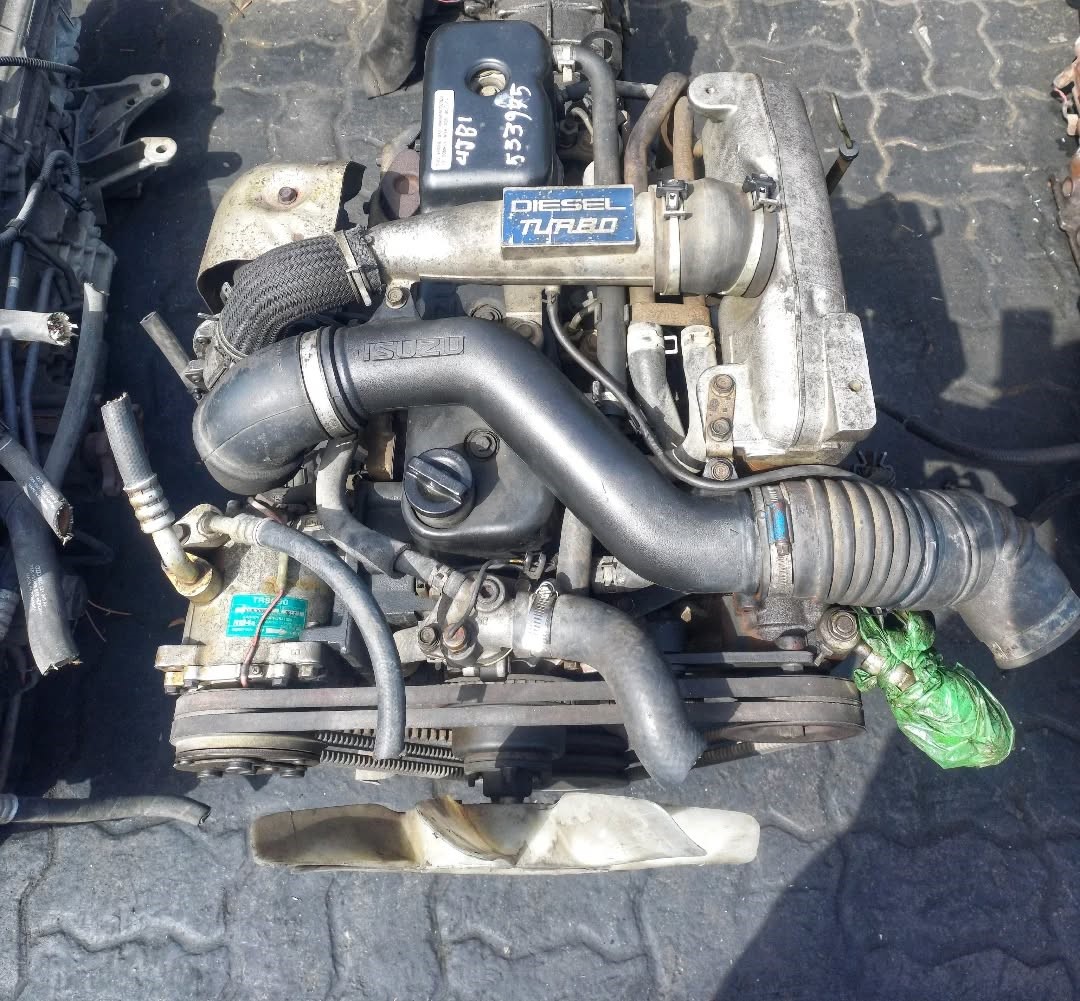
If you source auto parts for a workshop, run an import business, or manage a fleet in Africa, South Asia, or the Middle East, you already know that quality replacement engines at the right price point make or break your operation. Sharjah is where a significant portion of that supply originates.
The trade and re-export of used equipment and auto parts from Sharjah has grown from approximately USD 700 million in 2003 to an estimated USD 2 billion in recent years. The UAE automotive aftermarket reached USD 7.3 billion in 2024 and is projected to reach USD 10.5 billion by 2033. Within that market, engines and transmissions consistently sit among the highest-value components in the used parts trade.
This guide covers how used car engines export in Sharjah works, what buyers need to know before placing an order, and how to find a reliable exporter.
Sharjah's position as a used auto parts hub was built over decades and is anchored by three structural advantages.
Supply volume: The UAE is the largest importer of Japanese used cars globally. A significant share of those vehicles, many written off in Japan due to accident or insurance claims, are dismantled in the UAE and their mechanically sound components re-exported. Engines and transmissions are among the most profitable parts of that trade. Japanese engines in particular command strong prices: a Toyota Land Cruiser engine and transmission set can fetch over USD 4,000, reflecting the genuine demand buyers in export markets have for reliable Japanese powertrain components.
Logistics infrastructure: Sharjah sits adjacent to Jebel Ali Port, the largest seaport in the Middle East, and also has direct access to Khor Fakkan, one of the region's most active container ports on the east coast. Both handle significant volumes of used auto parts exports weekly. For buyers in East Africa, South Asia, and the Middle East, this infrastructure translates to competitive freight rates and reliable shipping timelines.
Dealer concentration: Sharjah's used parts market is geographically organised by brand and component type, with distinct areas serving Japanese, European, and American vehicles. This concentration drives competition among used engines dealers in Sharjah UAE, which keeps pricing honest and gives buyers genuine options.
Demand is consistent across several buyer types and geographies.
East Africa is among the largest export markets. Uganda, Kenya, Tanzania, and Ethiopia import significant volumes of Japanese brand engines for workshop repairs and vehicle restoration. Toyota holds approximately 30 to 35% market share in Africa, and demand for its Land Cruiser, Hilux, and Fortuner engines remains structurally high.
South Asia, including India, Pakistan, Bangladesh, and Sri Lanka, imports engines to support large repair markets where new OEM parts are cost-prohibitive.
The Middle East and Central Asia, including Iraq and Kazakhstan, source 4x4 and commercial vehicle engines regularly given demanding terrain conditions.
Across all markets, the main buyer types are automotive workshops replacing customer engines, used car dealers restoring vehicles for resale, fleet operators managing large commercial vehicle inventories, and importers buying in volume for resale in their home markets.
Used car engines export in Sharjah follows a structured sequence. Understanding each step protects you from quality issues and shipping delays.
A buyer contacts the exporter with their specific requirement: vehicle make, model, year, and engine code. The exporter confirms availability, condition grade, and mileage. The engine is tested before confirmation. The buyer receives photographs, a condition report, and a price quotation before any payment is committed. Once payment is agreed, export documentation is compiled, including a commercial invoice, packing list, and certificate of origin. The engine ships via sea freight from Jebel Ali or Khor Fakkan. An experienced used engines exporter in Sharjah has this documentation structured and ready, avoiding customs delays at the destination port.
The most important question any international buyer should ask before committing to a purchase is straightforward: has this engine actually been tested?
Reputable used engines dealers in Sharjah UAE run every engine through a structured quality check before confirming a sale. At minimum this should include compression testing, which measures cylinder pressure and confirms internal engine health; leakage testing, which identifies oil or coolant leaks before dispatch; a performance run, where the engine is started and checked for smooth operation, unusual noise, and proper output; a visual inspection for cracks, corrosion, and physical damage; and mileage verification through odometer reading or available documentation.
Engines that pass all checks are assigned a condition grade. A reputable exporter provides buyers with the condition report and photographs before payment. If an exporter cannot or will not provide this, treat it as a significant red flag. Contact International Motors for engine availability, export enquiries, and pricing at internationalmotors.ae.
The Sharjah market carries broad inventory across Japanese, American, Korean, and European brands. Toyota is consistently the most in-demand for African and Asian export markets, with Land Cruiser, Prado, Hilux, Fortuner, and Hiace engines in regular supply. Nissan, Mitsubishi, Honda, Hyundai, Kia, Ford, and Chevrolet are all stocked across passenger cars, SUVs, pickups, and commercial vehicles. Petrol engines account for the largest export volume. Diesel engines carry strong demand in markets where commercial vehicles dominate.